
 Inverters
 Batteries
 Commercial
 EV Chargers
 Accessories
 Heat Pumps
 Radiators
 Greenlinx
We’ve spent time going through the UK Government’s Warm Homes Plan in detail, and one theme becomes clear very quickly – residential energy use isn’t about single technologies anymore.
It’s about how solar, battery systems and heat pumps work together, and it’s being pushed sooner than many installers might think.
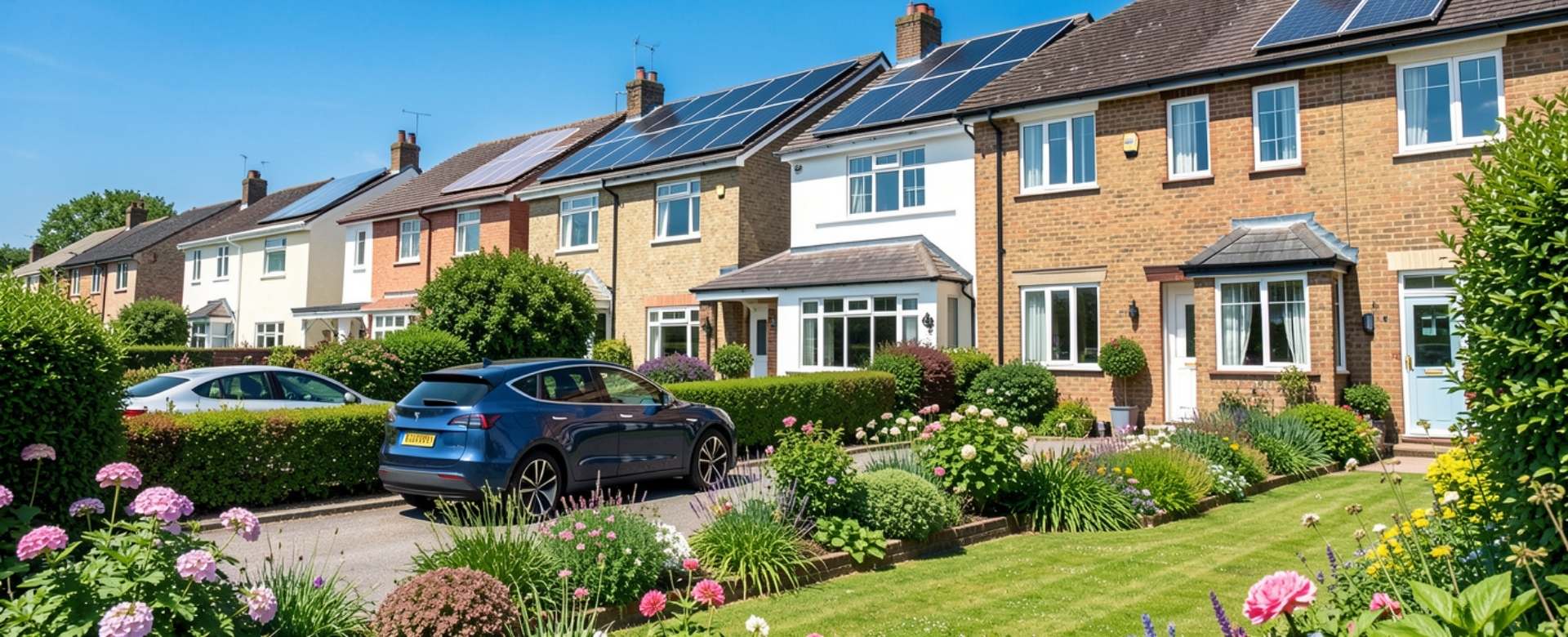
The document shows where UK homes are heading over the next five years. Heat pumps sit at the centre of that shift, but they’re expected to operate within a wider system of solar generation, battery storage and smart energy use.
If you install solar, battery storage or heat pumps, there are sections of this document you shouldn’t ignore. Below, we’ve broken down what matters most – and what it means for your business.
What is the Warm Homes Plan?
In case you’ve been tucked away in a well-insulated loft this past month, the Warm Homes Plan is the UK Government’s £15 billion strategy to upgrade up to 5 million homes by 2030 – focused on cutting energy bills, reducing gas dependence and accelerating the move to clean, electric heating.
It plans to do this by:
This is a coordinated shift towards electrified homes that generate and manage energy more intelligently.
The problem the Government is trying to fix
Right at the start of the Plan, the Government is crystal clear on the issues it’s trying to resolve:
The solution presented by the Government is a simple one:
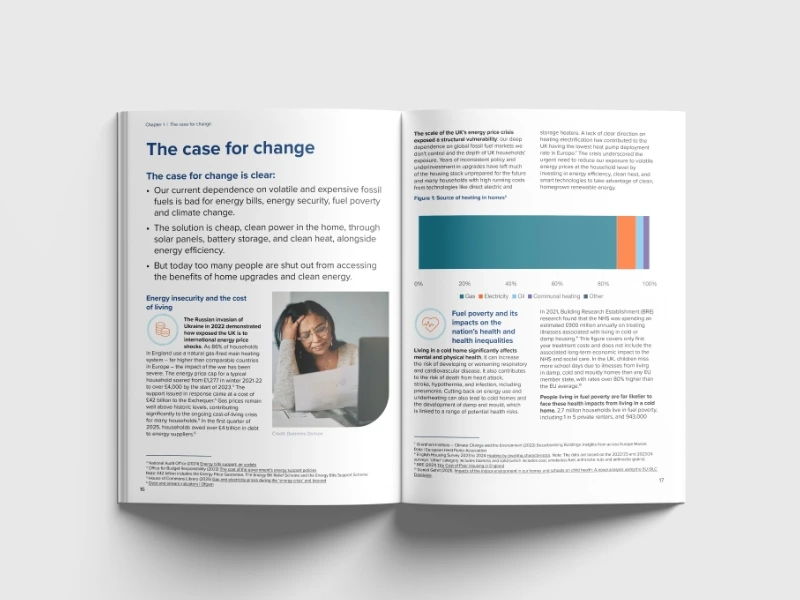
“Cheap, clean power in the home, through solar panels, battery storage and clean heat, alongside energy efficiency.”
Solar and battery storage are mentioned alongside clean heat for a reason. Replacing boilers with heat pumps is essential – but it’s not the whole plan.
The goal is to electrify homes and make that electrification affordable by enabling households to generate, store and manage more of their own electricity.
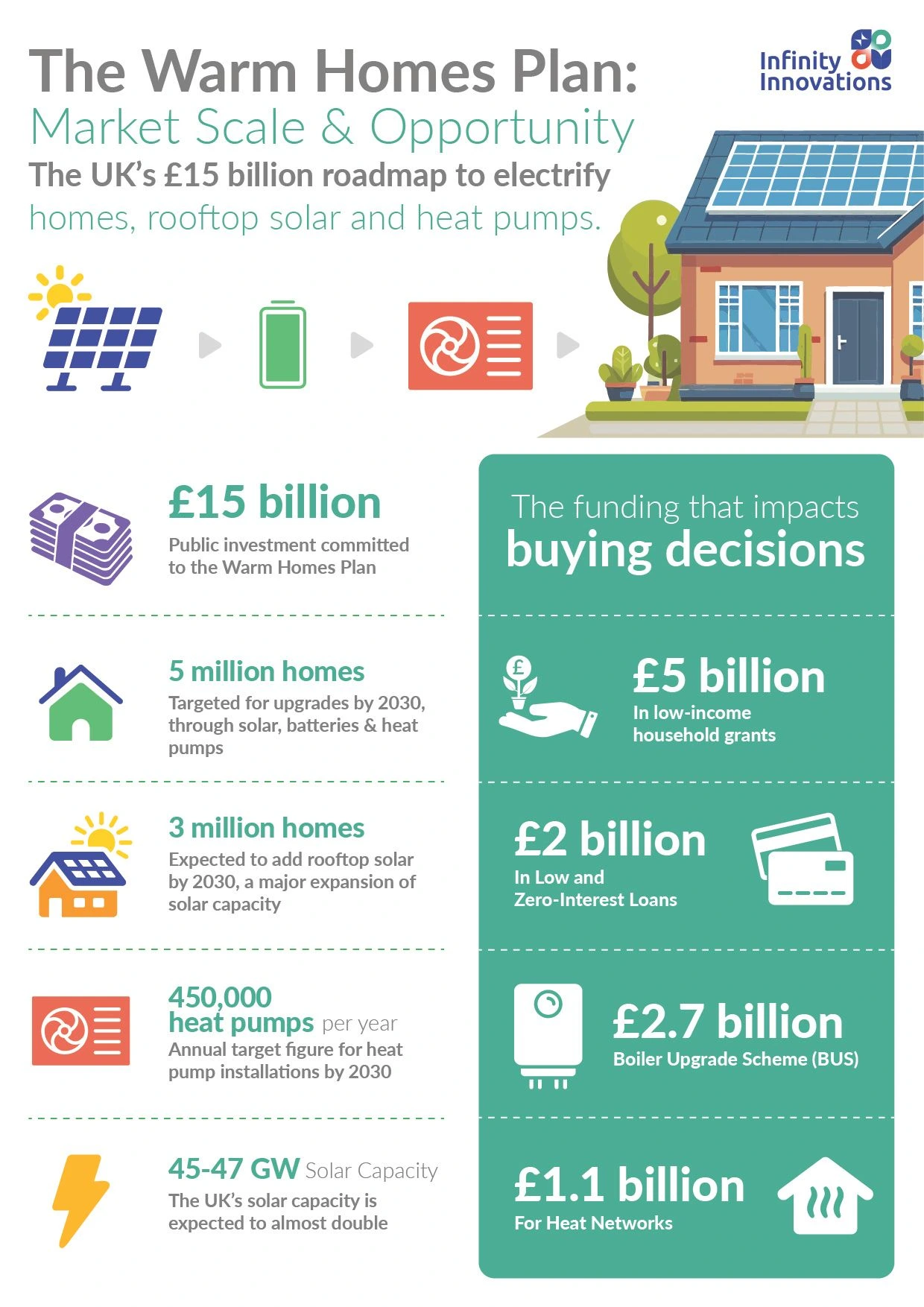
The Warm Homes Plan by numbers
Before diving further, it’s worth pausing on the scale of what’s being proposed. These are the figures installers should have in mind, because they define the size of the opportunity and the funding behind it.
The Future Typical UK Household
The Government has done a wonderful job of illustrating how the typical UK home is expected to look as this policy rolls out, found on pages 36-37.
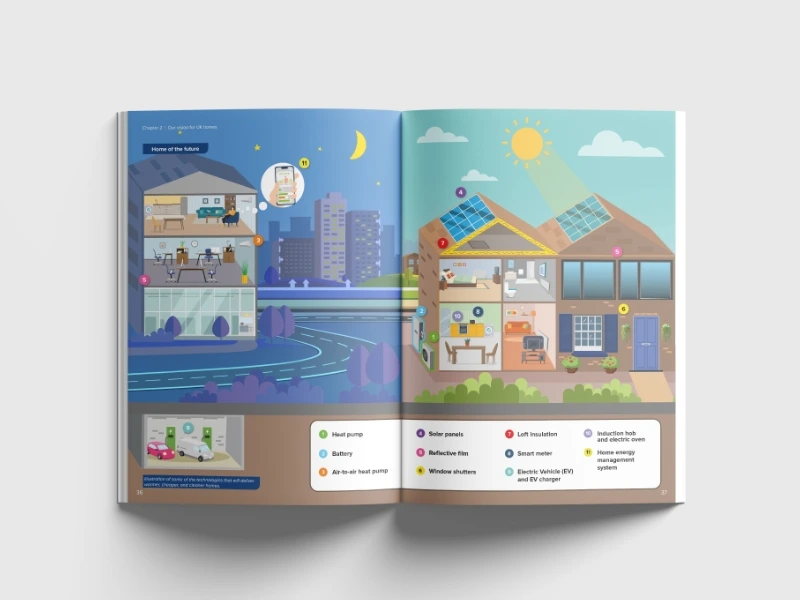
Their diagram includes solar panels, a home battery, a heat pump, an EV charger, a smart meter and a home energy management system.
This isn’t presented as an ideal scenario; it’s shown as a direction of travel for mainstream housing. This direction doesn’t think in terms of single upgrades; rather, it focuses on complete energy systems operating together.
Heat pumps, solar and battery storage will combine to reduce bills, reduce gas dependence and give households significantly more control over their energy.
Heat pumps: The Heart of the System
There’s an ambition to reach 450,000 heat pump installations per year by 2030. With £2.7 billion of continued funding through the Boiler Upgrade Scheme, electrified heating is clearly being treated as a national priority.

But what’s notable is how the document positions heat pumps – not as a standalone solution, but as part of a home that generates and manages its own electricity.
It’s an important distinction. Heat pumps are the centrepiece, but it’s clear that our Government’s vision is that homes will now rely on an integrated smart energy system around them.
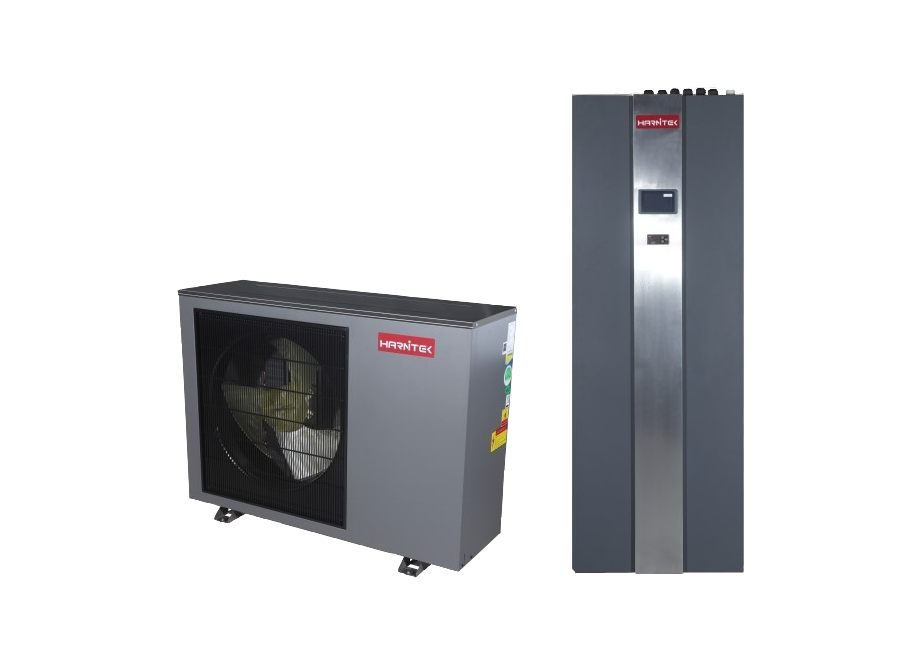
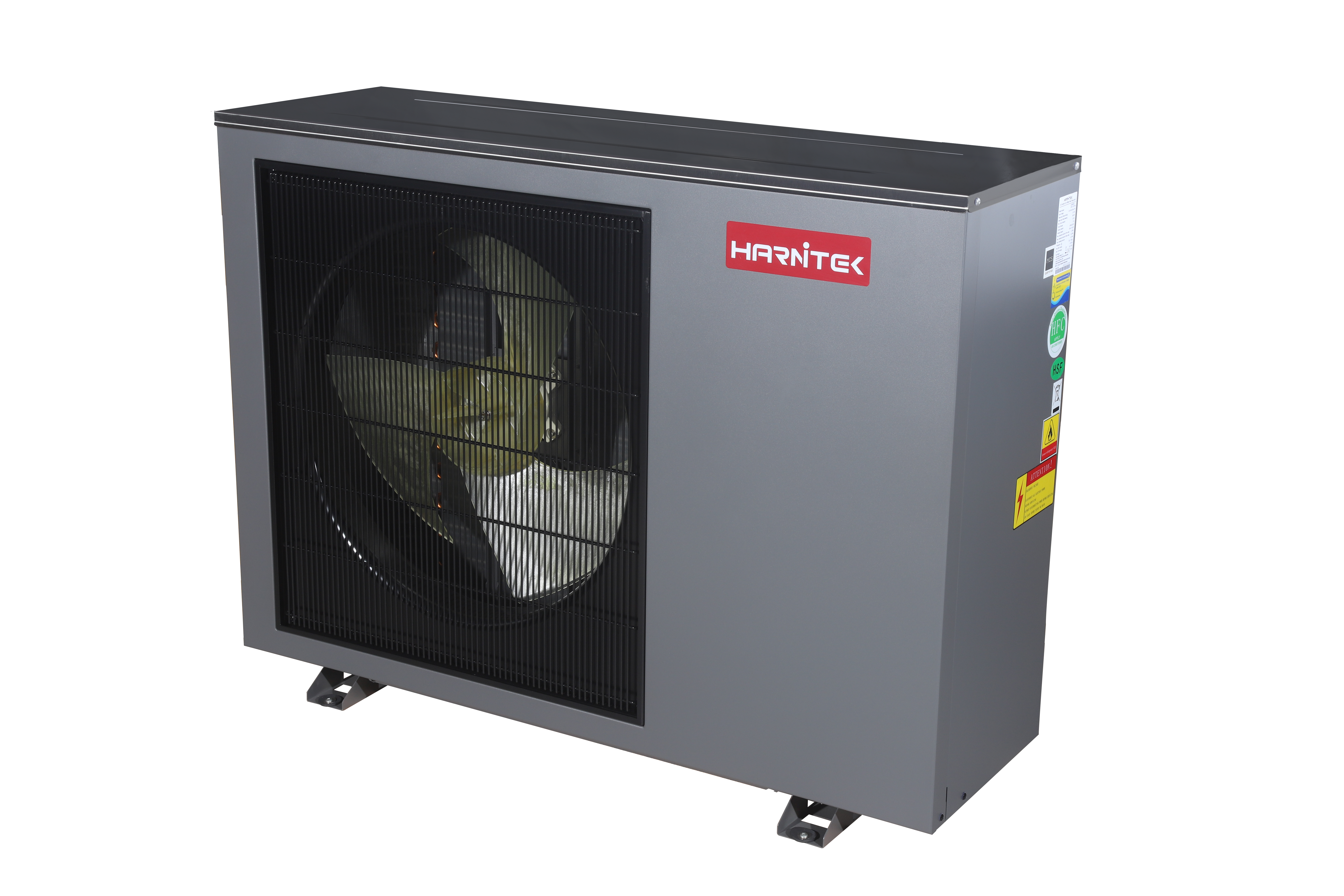
Designed for newbuild, retrofit and hybrid systems, Harnitek heat pumps combine A+++ efficiency with straightforward installation and UK-based technical support.
ECO4-ready and MCS certified, they integrate seamlessly with solar, storage and the Greenlinx smart energy control system.
Solar & Battery Storage Becomes Central to Electrified Heating
The Warm Homes Plan doesn’t treat rooftop solar as an optional add-on. Far from it. The ambition is for up to 3 million more UK homes (added to the current 1.6 million) to have rooftop solar by 2030 – a huge shift in how mainstream solar is expected to become.
Once a home moves to electric heating, generating some of that electricity on-site starts to matter far more to the end user. Solar stops being a “nice extra” and starts becoming part of the way households make electric heating affordable.
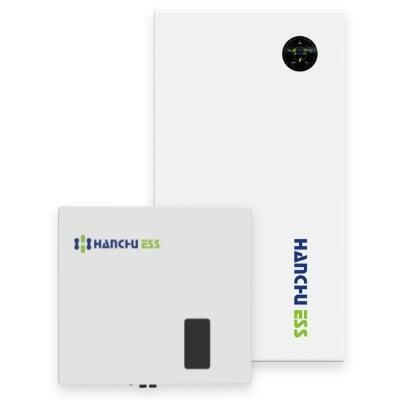
Modular, competitively priced and backed by a 12-year warranty, HANCHU ESS delivers intelligent storage built for integration with heat pumps and solar.
AI optimisation, smart weather compensation and UK technical support help installers deliver systems that customers trust.
Batteries and the Smart Use of Power
A significant section of the Plan focuses on consumer-led flexibility. In simplistic terms, this points to the importance of when households use electricity, not just how much they use.
The document notes that over 18,000 home batteries were installed in 2024 alone, with strong growth expected as more homes electrify.
Homes are expected to:
Once heating is electric, the the ability to store and time-shift power becomes fundamental. This is where smart energy control systems play a vital role in managing entire energy ecosystems.
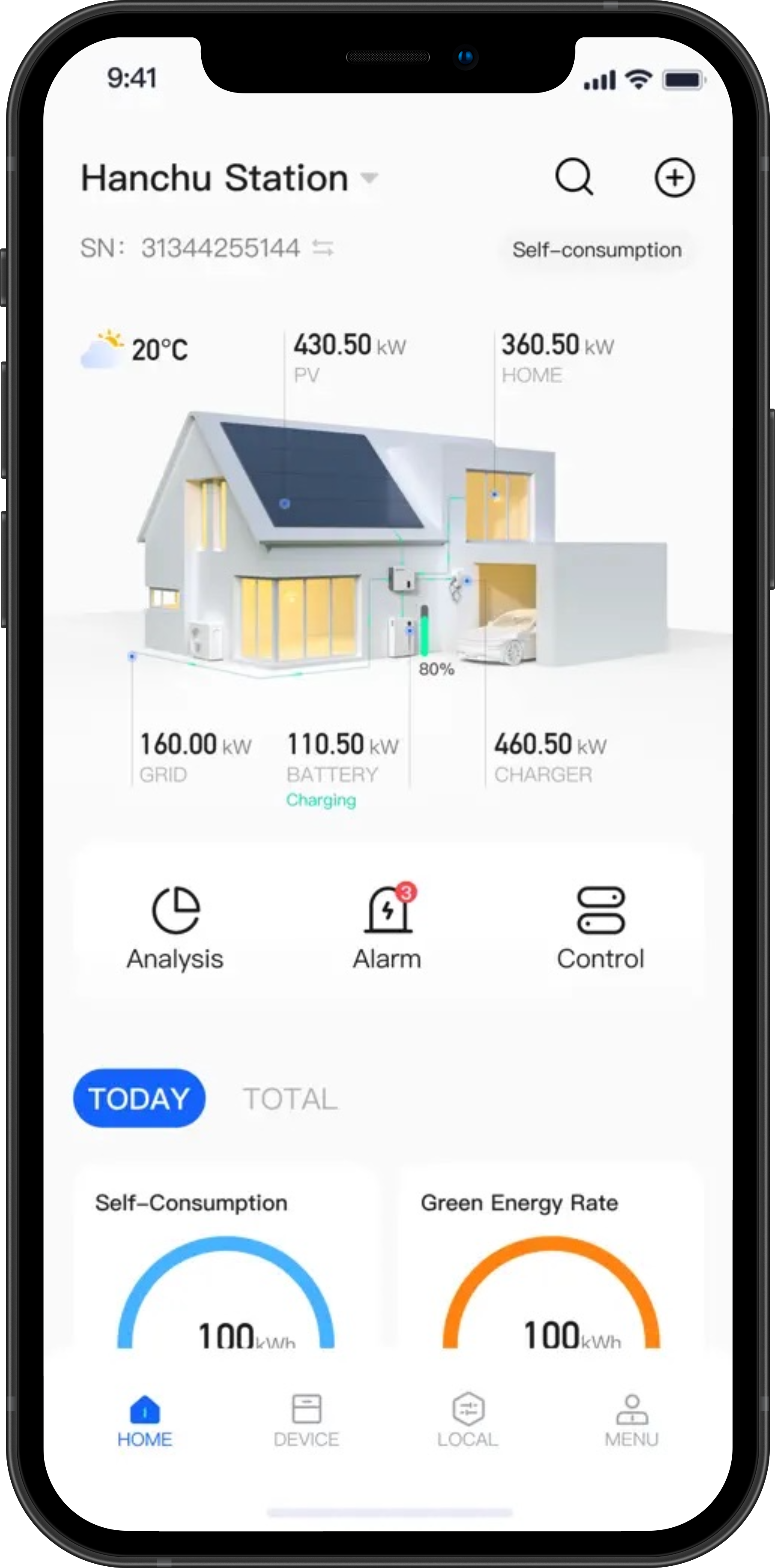
Greenlinx connects solar, batteries, inverters, EV chargers and heat pumps into one platform – giving installers remote diagnostics and full system control across every installation.
Built exclusively for HANCHU ESS and Harnitek systems.
Government Savings “Proof” – and How to Use It
Page 26 includes modelling of a home fitted with:
The (fairly modest) modelling shows up to £550 per year saved compared to a gas boiler.
Add a time-of-use tariff and smart charging strategy, and savings increase by another £300, totalling £850 annually.
Customers don’t need to understand policy. They understand bills.
Being able to explain that an integrated heat pump, solar and battery system can save hundreds of pounds per year – supported by grants and financing to make cleaner energy more affordable – changes the conversation.
Instead of selling individual technologies, you’ll be able to talk about a a complete solution to rising energy costs – backed by real figures, government modelling and real financial support to make it achievable.
Final Word: What This Means for Installers
The Warm Homes Plan isn’t asking for more isolated upgrades.
It’s pointing towards homes that are electrically heated, generating their own power, storing it and using it intelligently.
That’s the direction this market is moving over the next five years.
Speak to our sales team about combining heat pumps, solar, batteries and smart control into one coherent installation approach.